


A stroke interrupts blood flow to part of the brain, and the effects show up almost immediately. One side may feel heavy or refuse to cooperate. Standing up from a chair, something you never had to think about, takes planning. Walking becomes slow and effortful.
None of that is as permanent as it feels in the first weeks. The brain can reorganize, and movement often improves with the right training. That’s the work physical therapy does after a stroke: rebuilding strength, retraining balance, getting you back to things you once did without thinking. At Total Performance PT it happens one-on-one, built around where you are now rather than a standard protocol.
How a Stroke Can Affect Movement
Muscle weakness or paralysis. Weakness usually affects one side, ranging from a clumsy hand to a leg that won’t hold weight at all.
Balance and coordination difficulties. Damage to the areas controlling balance leaves many survivors unsteady, especially turning, reaching, or standing on one leg.
Changes in walking. Foot drop, a stiff knee, or a leg that swings outward are common, and each one narrows how far you can safely go.
Reduced flexibility and endurance. Unused muscles stiffen, and fatigue arrives much faster than it used to.
What Is Neurological Physical Therapy?
Neurological physical therapy is rehab built around the nervous system rather than one injured joint. It works on neuroplasticity. Repeat a movement enough times, at a difficulty that actually asks something of you, and the brain starts building new routes to muscles the damaged region can no longer reach well.
Your therapist finds tasks sitting just past what you can do comfortably, then repeats and progresses them. The goals are yours: walking the dog, returning to work, getting up the stairs to your bedroom.
Consistency beats intensity on any given day. Progress comes from steady work over months, which is why stroke rehabilitation therapy is built as a progression, not a fixed set of exercises.
How Physical Therapy Supports Stroke Recovery
Stroke physical therapy Horsham programs work across five fronts:
- Strength and mobility work. Rebuilding the weak side while keeping the stronger one from stiffening or overcompensating.
- Balance and coordination training. Weight shifts, reaching, and reacting to being nudged off balance, all in safe conditions.
- Gait rehabilitation. Retraining step length, timing, and clearance, sometimes with treadmill or body-weight support.
- Functional movement practice. Real tasks: standing from the couch, stepping over a threshold, carrying a mug.
- Building confidence. Fear of falling holds people back as much as weakness does, and it fades with repetition.
Regaining Independence After a Stroke
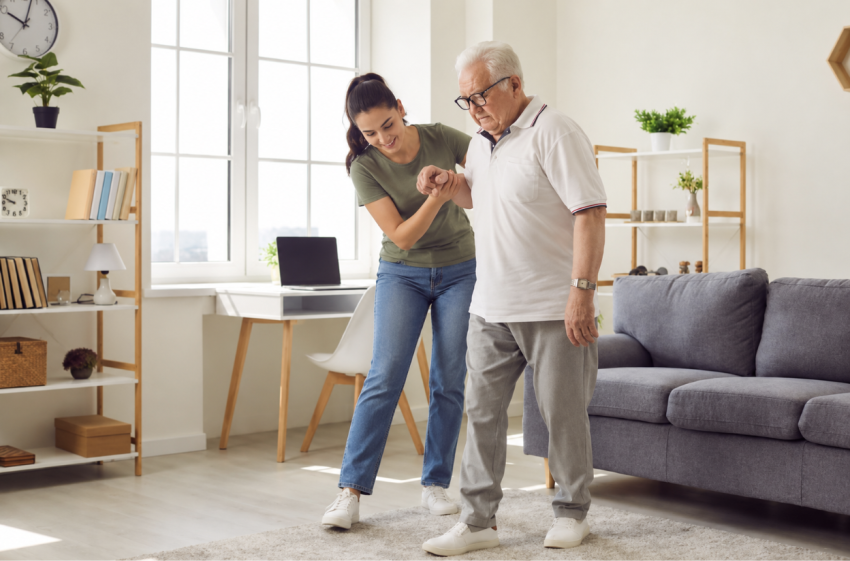
Independence comes back in pieces, not all at once. Transfers come first, since getting in and out of a chair safely opens up everything else. Walking follows, first with support, then over longer distances.
Stairs and uneven ground come later, since they demand more control. Then the focus shifts to dressing, cooking, getting into a car. A cane or brace isn’t a sign of failure. It’s what lets you move now while you keep working toward more.
What to Expect During Stroke Rehabilitation
Stroke rehabilitation therapy starts with an assessment. Your therapist looks at strength, tone, sensation, balance, walking, and everyday tasks, then asks what you want to get back to.
That becomes a plan with goals you can measure, like standing unsupported for a minute or walking to the mailbox. Progress gets tracked and the plan changes as you improve.
Neurological rehab North Wales plans include home exercise, and caregivers are often taught to help safely. Most of the week happens outside the clinic.
Neurological Physical Therapy at Total Performance PT
Two people with strokes in similar areas can present very differently, so stroke physical therapy Horsham begins with a thorough evaluation and adjusts as you change.
The focus stays on movement, balance, strength, and independence, with attention to what your home and routine demand. Patients come to us for physical therapy Harleysville and the surrounding towns, and the team stays with you across the long arc of recovery.
FAQs
How soon should physical therapy begin after a stroke? Earlier than most families expect. Once you’re medically stable, it often starts in the hospital within a day or two. Your medical team makes that call, and outpatient work picks up after discharge.
Can physical therapy improve walking after a stroke? Usually some, yes. Gait training works on step length, timing, and clearing the floor without catching a toe. How far it goes depends on where the stroke hit and how much of the leg it affected. Neurological rehab North Wales programs measure walking speed and distance, so you’ll know if you’re gaining ground.
How long does stroke rehabilitation take? Nobody can hand you a date. The steepest part of the curve is the first three to six months, when changes show up week to week. After that it slows. It doesn’t stop, though. Plenty of survivors are still making gains a year or two out if they keep training.
Can stroke survivors regain their balance? Often, with targeted work. Some get back to walking unaided. Others reach the point of moving safely with a cane, which is a genuine win when the alternative is not leaving the house.
What exercises are commonly used after a stroke? Sit-to-stand practice, weight shifting, step training, and repetitive limb movements come up constantly. Which ones suit you is another question. A physical therapy Harleysville program should prescribe them for your deficits, not off a list.
Conclusion
Recovery looks different for everyone. Some regain nearly everything; others make smaller gains that still change daily life. What holds across both is that consistent rehabilitation supports more mobility, confidence, and independence than going it alone.
If you or someone in your family is recovering from a stroke, contact Total Performance PT for an evaluation and a plan built around your goals.